Wadi Darbat: the complete guide to Dhofar's green valley
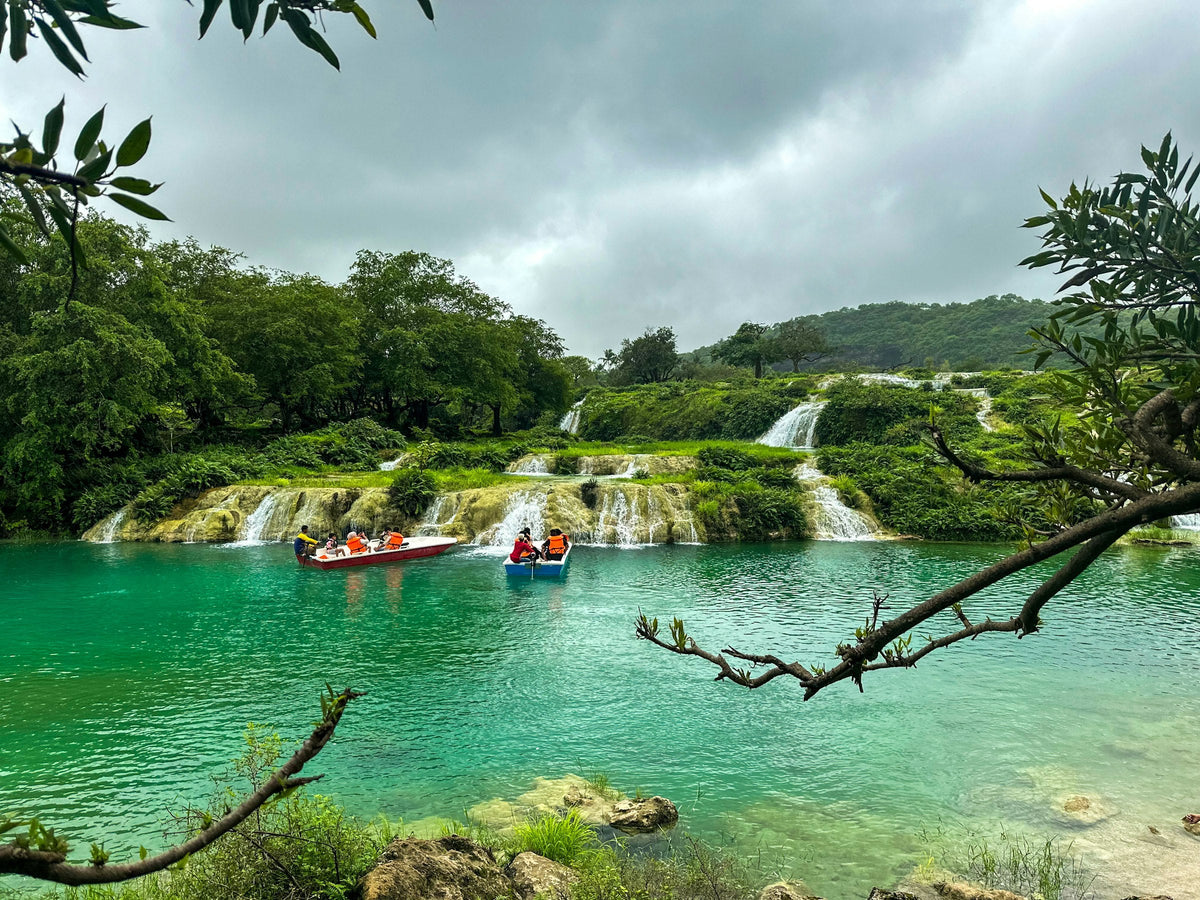
If one place sums up the magic of Dhofar, it is Wadi Darbat. In the dry months it is a quiet valley of acacias and limestone cliffs; during the khareef it becomes a green amphitheatre with a lake, rowing boats, grazing camels and, in good years, a waterfall pouring over a high cliff. This guide covers how to get there, when to go, what to see and how to visit safely, ideally with a local guide who grew up in these mountains.
Key takeaways
- Wadi Darbat lies roughly 35 to 45 km east of Salalah, inland from the town of Taqah, on paved roads.
- The waterfall usually flows only during and just after the khareef (roughly July to September), and depends on each year's rainfall.
- The lake, boats, caves and camels make it rewarding all year, but it is greenest from mid-July to September.
- Swimming is risky: the water hides deep spots, slippery rocks and currents after rain.
- Combine it with the Tawi Atair sinkhole and Jebel Samhan for a full day east of Salalah.
Where is Wadi Darbat?
Wadi Darbat sits in the foothills of the Dhofar mountains, east of Salalah. From the city centre, follow the coastal road towards Taqah, then turn inland and climb towards the valley. Depending on where you start and which entrance you use, the drive is about 35 to 45 km and usually takes 40 to 60 minutes, much longer on peak khareef weekends when traffic slows to a crawl. The road is paved and signposted in Arabic and English, so a regular car is enough. Downstream, the wadi flows towards the lagoon of Khor Rori and the ruins of Sumhuram, part of the UNESCO-listed Land of Frankincense.
The waterfall: when does it flow?
Wadi Darbat is famous for a broad waterfall that tumbles over a tall travertine cliff (a limestone formed by mineral-rich water over thousands of years). It is a seasonal waterfall: it generally appears when the khareef rains have filled the valley, most often from late July into September, and it can continue for a short while after the season. Its strength varies a lot from year to year; some years it is a thundering curtain, others a modest trickle, and in dry years it may not flow at all. Nobody can promise it on a given date, so treat it as a wonderful bonus rather than a guarantee.
What to see and do
The lake and the boats
Above the cliff, the valley floor holds a long, calm lake fringed with trees. During the season, local operators rent small pedal and rowing boats, a lovely way to glide past the reflections of the green slopes. Prices and opening hours are set locally and change, so bring some cash and check on the spot.
The caves
The cliffs around Darbat are dotted with natural caves and overhangs, carved by water in the limestone. Some are easy to see from the paths; others are reached by short, uneven scrambles. Traditionally they have offered shelter to herders and their animals in the mountains. Go only where the path is clear and dry, and never climb in fog or after rain.
Camels, cows and mountain life
Darbat is pasture land for the Jebali families of the Dhofar mountains, and their camels and cattle roam freely through the valley. Watching a herd walk through the mist is one of the most memorable sights of Dhofar. Keep a respectful distance, never feed the animals and always ask before photographing people.
Viewpoints and picnics
Several viewpoints look over the waterfall cliff and the lower valley. Families often picnic on the grass, especially in the late afternoon. Bring a mat, keep to existing paths and take all your rubbish with you so the valley stays beautiful for everyone.
Tawi Atair and Jebel Samhan nearby
A short drive higher into the mountains brings you to Tawi Atair, nicknamed the "well of birds": a huge natural sinkhole in the limestone, often described as one of the largest in the region, where you can hear birdsong echoing from below. There is a viewing area at the top; stay behind the barriers, especially in fog when the edge is hard to see. Continue towards Jebel Samhan, a protected massif whose viewpoints overlook the coastal plain towards Mirbat on clear days. Together with Darbat, these make a superb day east of Salalah, which is exactly what our Wadi Darbat & Ayn Athum tour is built around.
Safety in Wadi Darbat
Darbat is a peaceful place, but the khareef brings real hazards. Accidents, including drownings, have happened here, and the authorities regularly remind visitors to be careful. Keep these rules in mind:
- Avoid swimming in the lake and pools: depths change suddenly, the water can be murky and rocks are slippery.
- Stay away from the waterfall edge and the top of the cliff, especially when the ground is wet.
- Do not walk in dry riverbeds during heavy rain: flash floods can arrive quickly.
- Supervise children closely, near the water and in crowded areas.
- Drive slowly in fog on the mountain roads, with headlights on, and watch for animals on the road.
- Wear shoes with good grip; mud and wet grass are the norm in the khareef.
Best time to visit
- Mid-July to August: peak greenery and the best chance of seeing the waterfall, but heavy crowds and traffic, especially at weekends and in the afternoon.
- September: still green, often sunnier, with fewer visitors. A favourite month for photography.
- October to May: the waterfall is usually dry and the valley turns golden, but the lake, caves, birdlife and calm make it a pleasant stop on a cooler-season tour.
Whatever the month, aim for the morning: lighter traffic, softer light and easier parking.
Visiting with a local guide
You can visit Darbat on your own, but a local driver-guide changes the experience. Our guides are officially registered and born in Dhofar: they know the side roads that avoid the traffic, where the waterfall is flowing this week, which caves are safe to approach and how to greet the herders you meet. They drive the foggy mountain roads every day, so you can simply watch the landscape. A typical day pairs Darbat with Tawi Atair, Ayn Athum or the coast at Mirbat, at your pace. See all options on our Dhofar tours page.
FAQ
Is there an entry fee for Wadi Darbat?
Access to the valley itself has generally been free, while boat rides and some facilities are paid. Arrangements can change, so check locally or ask us before your visit.
Can I see the Wadi Darbat waterfall outside the khareef?
Usually not. The waterfall depends on monsoon rain and typically flows from late July into September. Outside that period the cliff is generally dry, though the valley remains worth a visit.
How much time should I plan?
Allow two to three hours for Darbat alone, or a full day if you add Tawi Atair, Jebel Samhan or Ayn Athum.
Is Wadi Darbat suitable for children and older travellers?
Yes, the main viewpoints and the lakeshore are easy to reach. Just avoid the cliff edges and slippery paths, and keep children close to you near the water.
Want to see Wadi Darbat at its best, without the stress of fog and traffic? Join our Wadi Darbat & Ayn Athum tour or book a private day in Dhofar with a registered local driver-guide.