Visiting the Empty Quarter from Salalah
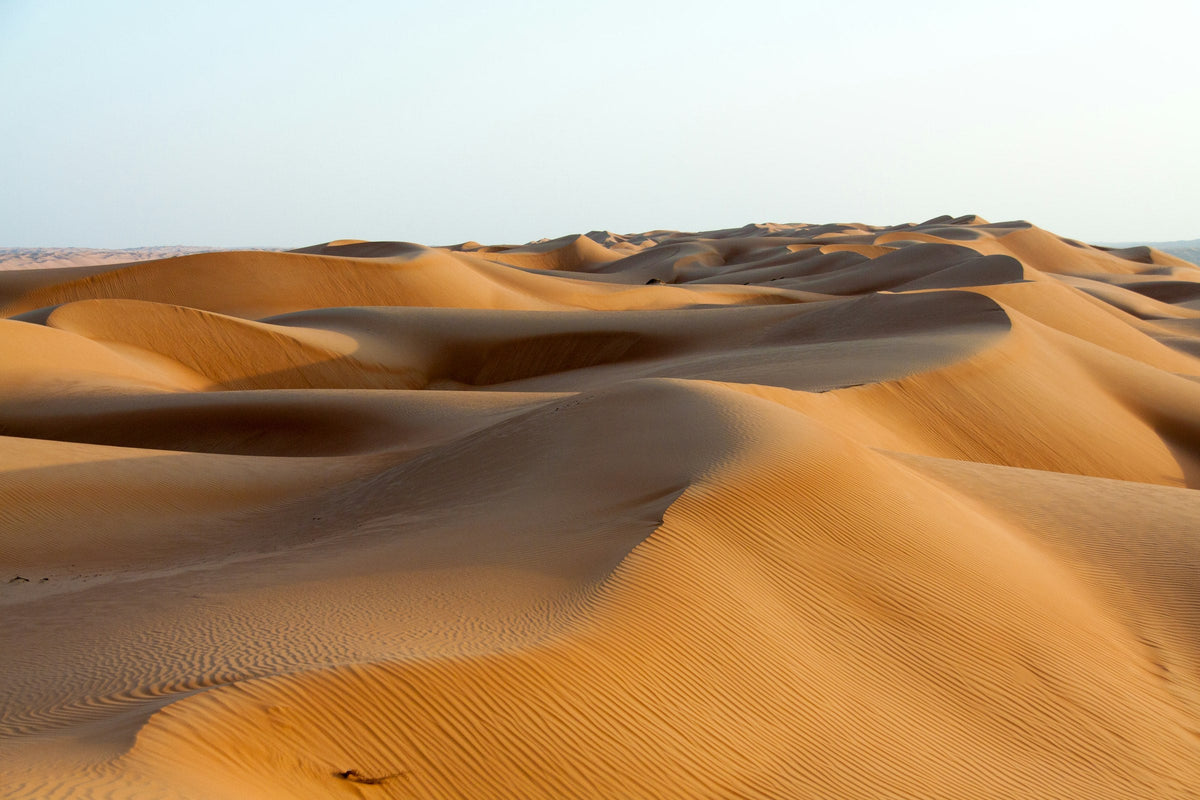
Few places on earth feel as vast and as silent as the Rub' al Khali, the Empty Quarter. This sea of sand stretches across Saudi Arabia, the UAE, Yemen and Oman, and its southern edge lies within reach of Salalah. In a single day you can leave the coconut palms of the coast, cross the green Dhofar mountains and the stony plateau of the Nejd, and stand on top of a dune at sunset. Here is how to plan the trip well, safely and respectfully.
Key takeaways
- The first big dunes are roughly two to three hours' drive north of Salalah, via Thumrait.
- The most comfortable season is from about November to February; October and March are acceptable shoulder months. Summer heat is dangerous.
- Driving on sand requires a well-equipped 4x4 and real experience. Never go into the dunes alone.
What is the Empty Quarter?
The Rub' al Khali is the largest continuous sand desert in the world, covering a large part of the southern Arabian Peninsula. In Oman, it borders the Dhofar governorate to the north and west. Its name means "the empty quarter", but it has never been completely empty: Bedouin families have crossed it for centuries with their camels, and the frankincense caravans once skirted its edges on their way north. Explorers such as Wilfred Thesiger made it famous in the twentieth century, and it still fascinates travellers today with its towering, ever-shifting dunes in shades of gold, orange and pink.
The route from Salalah
Salalah to Thumrait
Leaving Salalah, the road climbs through the Jebel Qara mountains, green during the khareef and golden the rest of the year. Beyond the passes, the landscape changes abruptly: you enter the Nejd, a dry plateau of gravel and rock. Along the way, many tours stop at Wadi Dawkah, a valley of wild frankincense trees listed by UNESCO as part of the "Land of Frankincense". The town of Thumrait, on the main road north, is the last real service point: fuel, water, snacks and a mosque.
Shisr and the legend of Ubar
From Thumrait, roads lead towards the village of Shisr, near the sands. Here lie the remains of a fortified caravan oasis that became world-famous in the 1990s when an expedition, helped by satellite imagery, linked it to the legend of Ubar, the "Atlantis of the Sands" mentioned in old Arabian tales. Whether or not it is the Ubar of legend, the archaeological site of Shisr is a genuine UNESCO component of the Land of Frankincense: a well and a fort that once supplied the caravans before they crossed the desert. A short visit gives real meaning to the dunes you will see next.
Into the dunes
Beyond Shisr and other access points in the region, the gravel plain gives way to sand with surprisingly little transition. This is where tarmac ends and true desert driving begins: tyres deflated, low gears, and a driver who reads the sand. Total driving time from Salalah to the dunes is roughly two to three hours depending on the access point and stops.
When to go
- November to February: the best time. Days are warm and pleasant, nights can be cool or even cold in the desert. Bring a warm layer.
- October and March: good shoulder months, with hotter middays.
- April to September: extreme heat; the sand surface can become scorching. Visits are possible only very early or late in the day and are not recommended for overnight stays.
Note that the khareef season in Salalah (roughly June to September) does not cool the desert: once you cross the mountains, you leave the clouds behind.
Sleeping in a desert camp
A night in the Empty Quarter is the real reason to make the trip. After the sunset over the dunes comes a dinner around the fire, then a sky with almost no light pollution, ideal for stargazing. Camps range from simple tents and mattresses on the sand to more comfortable Bedouin-style setups with blankets and basic facilities. Ask in advance what is provided (bedding, toilets, food, water) so you can pack accordingly. Waking up for sunrise, when the dunes turn from grey to gold, is often the most memorable moment of all.
Safety in the desert
- Never go alone. Travel with at least two vehicles or with an experienced guide, and tell someone your route and expected return time.
- Carry plenty of water, more than you think you need, plus extra fuel, a spare tyre, a compressor, a shovel and recovery tracks.
- Phone coverage is unreliable. Do not count on your mobile once you are in the dunes.
- Respect border areas. The desert extends towards the Saudi and Yemeni borders; some remote zones may require permission. Stay on routes that local guides know well.
- Protect yourself from the sun: loose, covering clothes, a hat or scarf, sunglasses and sunscreen, even in winter.
What to bring
- Light, long-sleeved clothing for the day and a warm jacket for the night.
- A scarf or shemagh against sun and wind-blown sand.
- Closed shoes or sandals you do not mind filling with sand.
- Sunglasses, sunscreen and lip balm.
- A headlamp or torch, a power bank and a bag to protect your camera.
- Your passport or ID and any medication you need.
- Cash for small purchases in Thumrait.
Why go with a local guide
You can reach the edge of the sand by yourself in a capable 4x4, but the dunes are another story. A guide born in Dhofar knows how the sand behaves, which routes are safe, where to camp out of the wind and how to get unstuck. Just as importantly, he brings the desert to life: the names of the dunes, Bedouin traditions, stories of the caravans and of Ubar. With an officially registered local driver-guide, you also benefit from a properly equipped vehicle and someone who knows when conditions are not right and it is better to wait.
FAQ
Can I visit the Empty Quarter in a day trip from Salalah?
Yes. A long day trip, usually leaving in the late morning or early afternoon to catch the sunset, is possible. An overnight stay is more relaxed and lets you enjoy the stars and sunrise.
Can I drive to the dunes myself?
You can reach the desert margin on paved roads, but driving into the dunes requires a 4x4, specific skills and recovery equipment. Without experience, go with a guide.
Is it suitable for children and older travellers?
Generally yes, in the cool season and with a comfortable camp. Dune driving can be bumpy, so tell your guide in advance about any health concerns.
Do I need a permit?
Ordinary visits to the desert margin from Salalah do not normally require a special permit, but rules for remote and border areas can change. Check with the authorities or ask us.
Ready to see the dunes with someone who grew up at their edge? Discover our Empty Quarter overnight trip from Salalah, or explore all our Dhofar tours. Questions? Contact us.